The Promised Dream
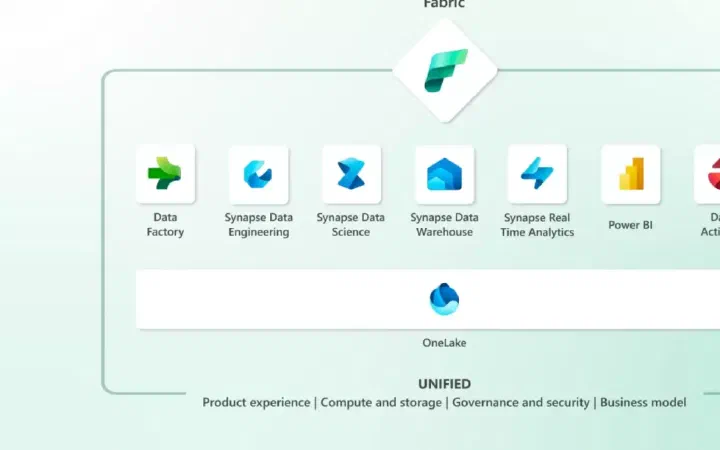
In May 2023, Microsoft announced Microsoft Fabric as a revolutionary solution to unify every analytical workload on a single platform. The promise was ambitious: lakehouse, data warehouse, real-time analytics, and machine learning working in an integrated way, eliminating the need for multiple specialized tools.
The initial reception was extremely positive. CTOs and data architects envisioned a future where they could simplify their data architectures, cut operating costs, and speed up the delivery of insights. The technical demos were impressive, showing data flowing between different workloads with no apparent friction.
Today, almost two years after launch, Microsoft Fabric still hasn’t reached the adoption expected in the enterprise market. Despite significant improvements to the platform, many organizations remain hesitant to migrate from their current solutions. This analysis examines the main factors that contributed to this situation.
Act I: The Prelude of Promise
Scene 1: The Grand Overture
When Microsoft Fabric was announced in May 2023, the expectation was a revolution in the data platform market. Microsoft correctly identified the biggest problem of the modern data era: fragmentation. Companies spent significant resources maintaining multiple platforms, like Synapse for data warehousing, Power BI for visualization, Azure ML for machine learning, and Data Factory for ETL, each with its own learning curve, pricing model, and technical limitations.
Fabric was positioned as the unifying solution, promising that all of these needs could be met on a single integrated platform. The value proposition was clear: OneLake as unified storage, compute shared across workloads, centralized governance, and a consistent user experience. For organizations tired of managing multiple tools, Fabric represented a significant simplification.
The go-to-market strategy was well executed. Technical demos showed data flowing seamlessly between different workloads, data scientists collaborating with data engineers in the same environment, and executives getting real-time insights through integrated dashboards. The message was consistent: simplicity, efficiency, and innovation on a single platform.
Scene 2: The First Dissonant Chords
However, organizations that adopted Fabric in the early months discovered a reality different from the one presented in the demos. The first problems became evident quickly, creating hesitation in the market.
The first obstacle was the pricing model. Unlike traditional solutions with transparent pay-as-you-go models, Fabric introduced a capacity system based on Capacity Units (CUs) that many organizations found confusing and unpredictable. Companies used to the clear pricing models of Databricks or Snowflake found themselves lost trying to estimate the real costs of their workloads on Fabric.
The documentation, essential for enterprise adoption, was incomplete and fragmented. Promised features showed up marked as “preview” or “coming soon,” leaving data architects hesitant to bet critical projects on a platform that wasn’t fully mature yet. It felt like working with a beta version being sold as a finished product.
Act II: The Tragedy of Costs
Scene 1: The Phantom of F64+
The minimum F64 capacity requirement for many of Fabric’s advanced features became one of the biggest obstacles to adoption. This requirement represents a significant investment that many organizations weren’t prepared to make.
An F64 capacity costs about $8,400 a month, or more than $100,000 a year. For many organizations, especially small and midsize businesses, that amount is a substantial investment that has to be justified with a clear, immediate ROI. The problem is that Fabric, in its first years, couldn’t demonstrate that ROI convincingly for most use cases.
The situation gets more complicated when we compare it with the alternatives. An equivalent implementation on Databricks, especially for machine learning and data science workloads, often costs a fraction of the price of F64+. Organizations that migrated from Synapse to Databricks in recent years discovered they could get more functionality for less money, setting a precedent that’s hard to beat.
Scene 2: The Capacity Trap
Fabric’s capacity model, while innovative in theory, created significant practical challenges. Unlike platforms that scale automatically based on demand, Fabric requires organizations to buy capacity up front, creating a dilemma: buying too little capacity results in throttling and degraded performance, while buying too much results in wasted resources.
This dynamic created a new operational need: dedicated Fabric capacity management. Organizations discovered they needed additional expertise not just to use the platform, but to manage its costs efficiently. That added operational complexity many companies hadn’t anticipated.
The lack of mature cost management tools made the problem worse. While AWS, Azure, and GCP offer sophisticated dashboards for cost monitoring, Fabric was slow to develop equivalent tools, leaving organizations with limited visibility into their CU spending.
Act III: The Lost Timing
Scene 1: The Migration That Didn’t Wait
Fabric’s launch timing may have been Microsoft’s most critical mistake. When Fabric launched in 2023, many organizations had already completed their migrations from Azure Synapse to Databricks . That migration, which happened mostly between 2021 and 2023, was driven by Synapse’s limitations and by Databricks’ technical superiority in machine learning and data science workloads.
Organizations that had invested months or years migrating to Databricks, training teams, and establishing processes weren’t willing to embark on another disruptive migration so soon. The cost of switching wasn’t just financial; it also included lost productivity, operational risk, and organizational change fatigue.
Microsoft missed a critical window of opportunity. If Fabric had launched in 2021, it could have captured many of the organizations that eventually migrated to Databricks. By 2023, those organizations were already settled on their new platforms and starting to reap the benefits of their migrations.
Scene 2: The Maturity of the Competition
While Fabric struggled with its growing pains, the competition didn’t stand still. Databricks kept innovating aggressively, launching features like Unity Catalog for governance, Delta Live Tables for real-time ETL, and MLflow for MLOps. Snowflake expanded its capabilities beyond data warehousing, adding robust support for machine learning and data science.
More importantly, those mature platforms offered something Fabric still couldn’t: predictability. Organizations knew exactly what to expect in terms of performance, costs, and features. Fabric, on the other hand, was still constantly evolving, with features being added, modified, or discontinued regularly.
Stability became a deciding factor. CTOs who had been burned by problematic implementations of immature technologies preferred to bet on proven platforms rather than risk their careers on a promise, however brilliant it might be.
Act IV: The Technical Limitations
Scene 1: Reality vs. Promise
As organizations began implementing Fabric in real-world scenarios, the technical limitations became apparent. The promise of unification, while attractive in theory, ran into practical realities Microsoft hadn’t fully anticipated.
Machine learning workloads, especially those that required specialized GPUs or specific frameworks, hit limitations on Fabric that didn’t exist on Databricks. Configuration flexibility, crucial for advanced use cases, was more restricted on Fabric, forcing organizations to make compromises in their architectures.
The promised integration between different workloads, while functional, wasn’t as seamless as advertised. Data scientists found they still needed to understand the nuances of different engines and optimize their code for each specific context. The promise of “write once, run anywhere” turned out to be more complicated in practice.
Scene 2: The Steep Learning Curve
Paradoxically, a platform designed to simplify the lives of data professionals ended up creating a new layer of complexity. Professionals experienced in Spark, SQL Server, or Power BI found they had to relearn fundamental concepts to work efficiently on Fabric.
The fragmented documentation and the platform’s rapid evolution made training a constant challenge. Organizations found they needed to invest significantly in upskilling, not just for new hires, but to reskill experienced teams.
This learning curve became an additional obstacle to adoption. In a competitive job market, where qualified professionals are scarce, organizations hesitated to bet on a technology that required substantial investment in training with no guarantee of return.
Act V: The Late Awakening
Scene 1: The Signs of Change
Recognizing the challenges, Microsoft began making significant adjustments in 2024 and 2025. Removing the F64+ requirement for some features was an important first step, signaling that the company was listening to market feedback.
Investments in documentation, cost management tools, and platform stabilization showed that Microsoft was taking the criticism seriously. Strategic partnerships and integrations with popular tools in the data ecosystem demonstrated a more pragmatic, less proprietary approach.
The introduction of more flexible pricing models and cost optimization tools indicated that Microsoft was learning from its early mistakes. Still, the question remained: would it be too late to recover the lost momentum?
Scene 2: The Battle for Redemption
Today, Microsoft Fabric finds itself at a crossroads. On one hand, the platform has evolved significantly since its launch, solving many of the initial problems and adding robust features. On the other hand, the initial window of opportunity has closed, and Microsoft now has to convince organizations already settled on other platforms to consider a switch.
The current strategy seems to focus on specific use cases where Fabric offers clear advantages, especially for organizations already invested in the Microsoft ecosystem. Native integration with Microsoft 365, Azure, and Power BI creates unique value for certain organizations.
Still, the reality is that Fabric missed the chance to be the obvious choice for new implementations. Now it has to fight for every customer, competing not just on features, but also on price, maturity, and ecosystem.
Epilogue: Lessons from a Foretold Tragedy
The story of Microsoft Fabric is a fascinating case study in how timing, pricing, and execution can determine the success or failure of a technology, regardless of its technical merit. Fabric isn’t a bad platform. In fact, in many ways, it represents an innovative vision of the future of data. However, a series of strategic decisions and execution limitations kept it from reaching its potential.
The most important lesson is that in the enterprise world, perception often matters more than reality. Fabric may have solved many of its early problems, but the first impression had already been formed. Organizations that had negative experiences in the first months rarely give a second chance, especially when mature alternatives are available.
Fabric’s future remains uncertain. Microsoft has the resources and the determination to keep investing in the platform, and there are signs it’s learning from its mistakes. However, the window to become the dominant platform in the data market may have closed for good.
Like every tragic opera, Fabric’s story reminds us that even the most promising heroes can fail when fate conspires against them. The question that remains is whether this is truly a tragedy or just the first act of an eventual redemption.
End of the First Movement
Until the next article!